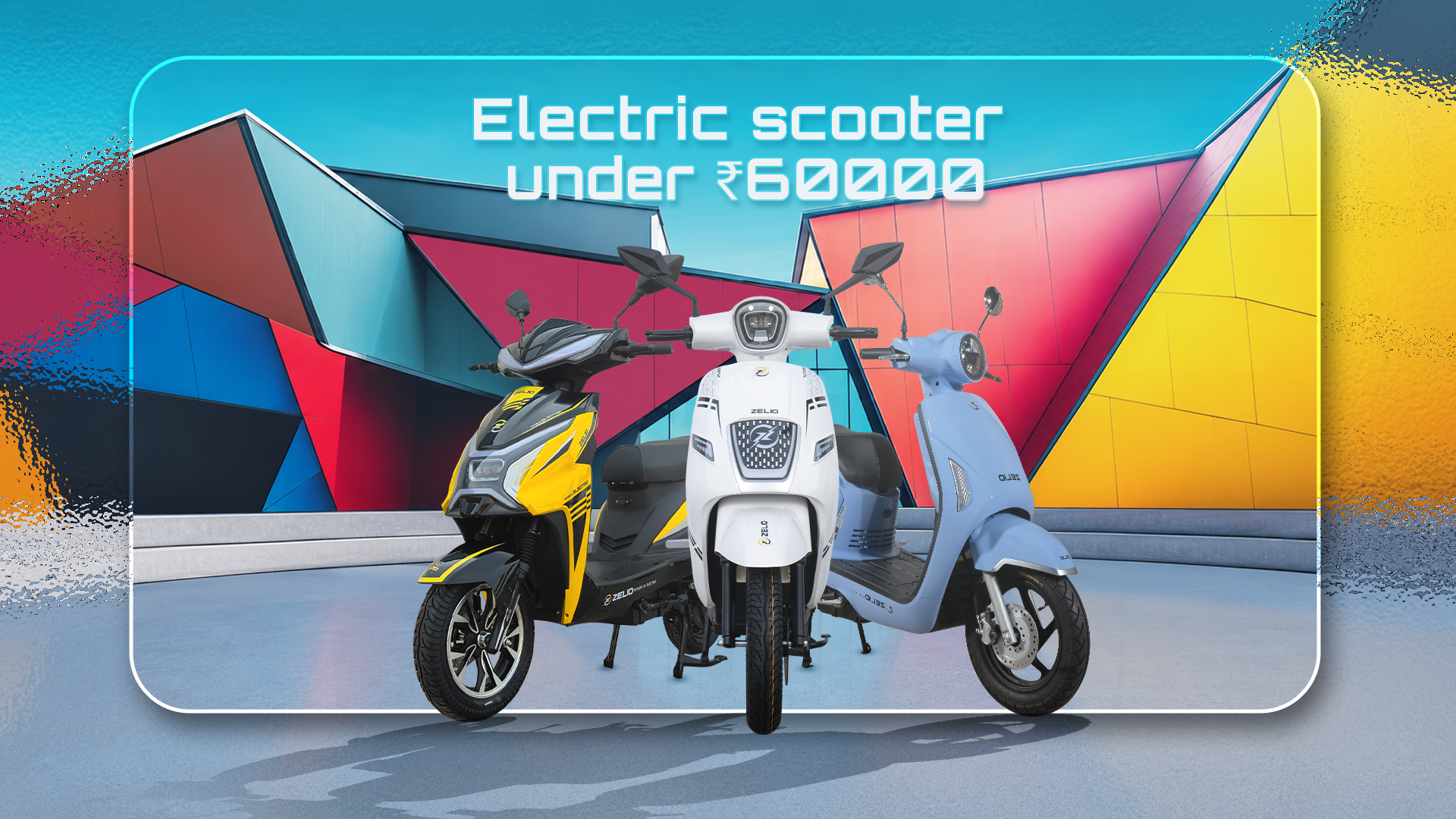
Best Electric Scooter Under 60000 in India 2026 - Real Prices, Honest Picks
Electric Scooters
15 June 2026

Best Electric Scooter Under 60000 in India 2026 - Real Prices, Honest Picks

Our top pick: Zelio Gracy i at Rs 58,159 - front disc brake, fast charging, 60-90 km range, 2-year warranty. No driving licence required.
Rs 60,000 gets you into genuine territory in the Indian electric scooter market. Not the bottom where brand accountability is questionable. Not the top where you pay for things you may never use. Right in the middle where six well-built, warranted, Made in India electric scooters live - each covering a 30-50 km daily commute at Rs 0.25 per km with no driving licence and home charging.


Before You Buy - Four Things That Actually Matter

Real range is not claimed range. Every manufacturer tests in a lab with no load, no inclines, ideal conditions. On Indian roads, deduct 15-20%. A scooter claiming 90 km gives you 70-75 km daily. Plan your charging routine around the realistic figure.

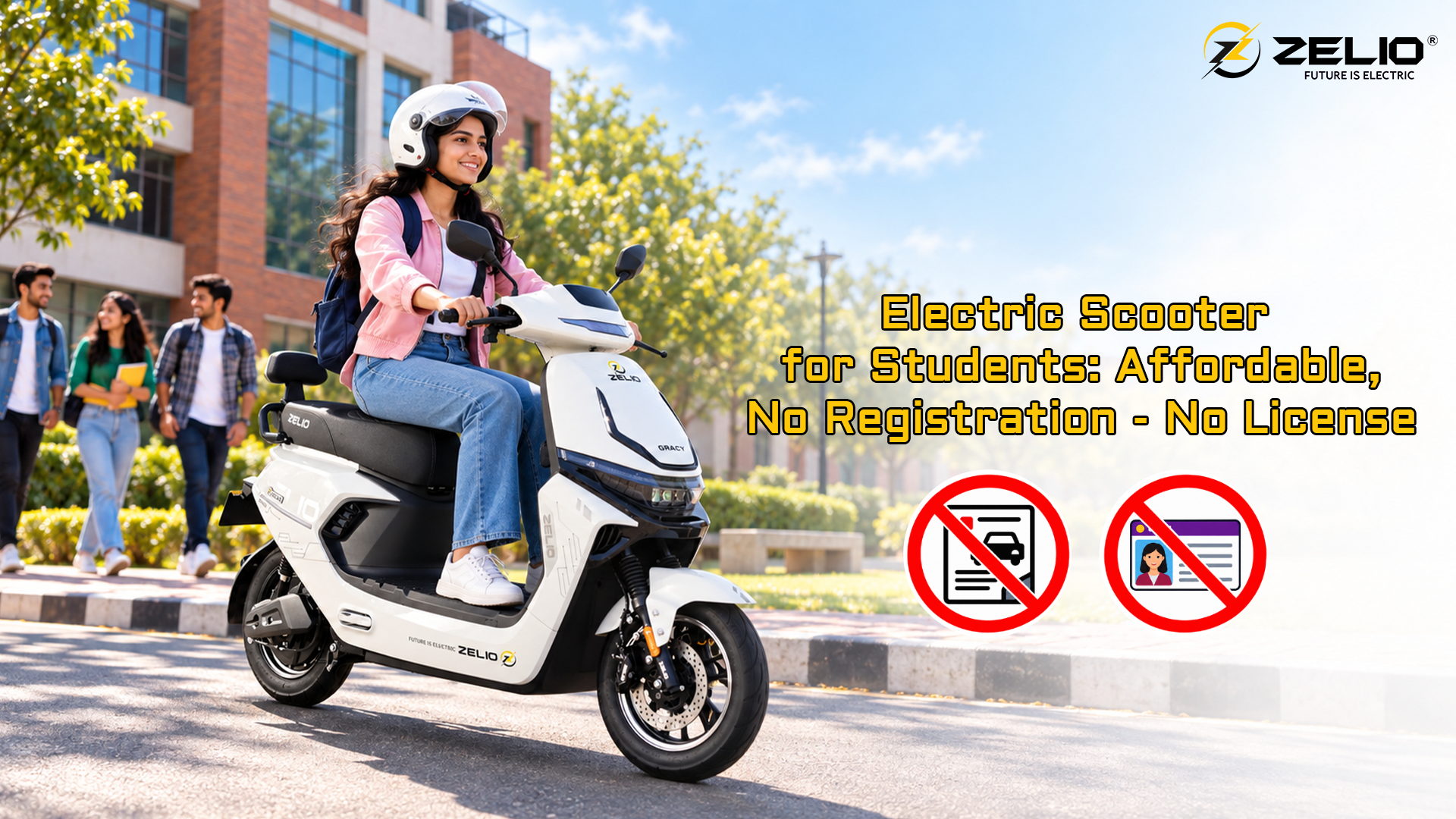
No licence, no registration. Every model in this guide runs under 25 km/h. No driving licence, no RTO registration, no road tax. The non-RTO electric scooter guide explains what this means legally before you visit a showroom.

Warranty backed by real service. 2-year warranty on motor, controller and frame. But a warranty card from a brand with no service centre near you is useless. Zelio has 350+ authorised centres across India. Ask before you buy: how many are within 20 km of your home?

Lead acid vs lithium. Lead acid: 7-10 hours to charge, 2-3 year lifespan. Lithium: 4-5 hours, 3-5 years. All six models offer lithium upgrades. The lithium vs lead acid guide breaks down the full cost difference if you are deciding.


Best Electric Scooters Under 60000

1. Zelio Eeva Eco LX - Best budget Electric Scooter 

Price: Rs 50,659 | Range: 60-80 km | Motor: 48/60V BLDC | Licence: No

The lowest price in this guide from a nationally warranted, Made-in-India brand. Tubeless alloy wheels, anti-theft alarm, keyless drive, USB port, 2-year warranty. The tubeless wheels matter more than people think - a puncture on a tubeless tyre is manageable on the side of the road. A tube tyre blowout in peak traffic is not.

60-80 km covers a 25-35 km daily commute on a single charge. The right starting point for a first-time EV buyer who wants the best budget electric scooter under 55000 without compromising on after-sales support. Comparing it with the Little Gracy? The Eeva Eco LX vs Little Gracy comparison makes that decision straightforward.

Explore Zelio Eeva Eco LX

2. Zelio Eeva Eco - For the Rider Who Just Wants to Get There

Price: Rs 51,809 | Range: 60-80 km | Motor: BLDC | Licence: No

Same route every day. 25-35 km. Home charging every night. The Eeva Eco is built for exactly that routine - no unnecessary extras, nothing that inflates the price. BLDC motor, anti-theft alarm with centre lock, keyless drive, USB port, digital speedometer. Everything you use daily at Rs 51,809 from a brand with real accountability.

Explore Zelio Eeva Eco

3. Zelio Gracy i - Best Electric Scooter Under 60000 for Daily Commute

Price: Rs 58,159 | Range: 60-90 km | Motor: 60/72V BLDC | Licence: No

2.5 lakh riders. That is how many Indians have chosen the Gracy i for their daily commute. It is Zelio's bestselling model and the most complete electric scooter under 60000 for office and college commuters in India.

Front disc brake that holds in rain and emergency stops. Fast charging on the lithium variant - useful when overnight charging did not happen. Telescopic hydraulic suspension. A 60/72V motor that handles flyovers and pillion weight. At Rs 58,159, it brings features that most scooters at this price simply do not offer.

If you are deciding between this and the Legender+ Premium, the Gracy i vs Legender+ Premium comparison tells you exactly when spending more makes sense.

Explore Zelio Gracy i

4. Zelio Little Gracy - Best Electric Scooter Under 60000 for Women and Seniors

Price: Rs 54,109 | Range: Up to 80 km | Motor: BLDC | Licence: No

Some riders find full-sized scooters slightly too heavy at a standstill, too wide in narrow lanes. The Little Gracy solves that. Lighter and shorter than everything else in this guide, it handles city lanes and tight parking without the effort a standard scooter demands. CBS braking, alloy wheels, telescopic suspension, anti-theft alarm - safety is not compromised, just the size.

Women riders, senior citizens, and first-time buyers consistently find it the easiest electric scooter under 60000 for daily commute to live with. The best electric scooter for ladies guide covers why compact and CBS matter more than range for this rider.

Explore Zelio Little Gracy

5. Zelio Gracy - Solid All-Rounder for Varied Daily Routes

Price: Rs 56,434 | Range: 60-90 km | Motor: 60V BLDC | Licence: No

A step up from the Eeva family in motor power. The 60V BLDC handles inclines and moderate pillion load better than the 48V motors in the Eeva range. 60-90 km of range gives a comfortable buffer for a 35-45 km daily commute with varied conditions - slopes, semi-urban stretches, occasional extra load. Anti-theft alarm, keyless drive, digital speedometer, USB port.

Explore Zelio Gracy

6. Zelio Eeva Eco ZX - Same Budget, Better Looking

Price: Rs 52,959 | Range: 60-80 km | Motor: BLDC | Licence: No

Rs 1,150 more than the Eeva Eco for a noticeably sharper design. Same motor, same warranty, same home charging. If you want a practical electric scooty under 60000 that also looks good parked outside a college or office, the Eco ZX gives you that without stretching the budget in any meaningful way.

Explore Zelio Eeva Eco ZX


For the latest on-road prices across Zelio's lineup, see the battery scooty price list.


All Six at a Glance

Model

Price (60V Lead Acid)

Range

Best For

Zelio Eeva Eco LX

Rs 50,659

60-80 km

First-time buyers, tightest budget

Zelio Eeva Eco

Rs 51,809

60-80 km

Simple daily commute

Zelio Eeva Eco ZX

Rs 52,959

60-80 km

Budget with better design

Zelio Little Gracy

Rs 54,109

Up to 80 km

Women, seniors, compact city rides

Zelio Gracy

Rs 56,434

60-90 km

Varied routes, moderate pillion use

Zelio Gracy i

Rs 58,159

60-90 km

Best overall daily commuter

60V/32AH Lead Acid, ex-showroom Haryana and Punjab, 2026. Check your state price


What It Actually Costs to Run Every Month


Petrol Scooter

Zelio Electric Scooter

Cost per km

Rs 2.5

Rs 0.25

Daily cost (35 km)

Rs 87

Rs 8

Monthly cost

Rs 2,625

Rs 240

Annual fuel cost

Rs 31,500

Rs 2,880

Annual servicing

Rs 3,000-5,000

Rs 0

Total annual cost

Rs 34,500-36,500

Rs 2,880

Annual saving: Rs 31,000-34,000. The Gracy i at Rs 58,159 pays for itself in under 2 years. To keep that saving intact over the years, the electric scooter battery life guide covers how to get maximum lifespan from your battery.


Which One Is for You?

Student, 15-30 km daily. Eeva Eco LX at Rs 50,659 or Little Gracy at Rs 54,109. No licence, home charging, Rs 0.25 per km. The best electric scooter for college girls guide covers the student angle in detail.

Housewife, errands within 20-25 km. Little Gracy at Rs 54,109. Easy to handle, compact, CBS braking. The best electric scooter for housewives guide covers this use precisely.

Office commuter, 30-50 km daily. Gracy i at Rs 58,159. Disc brake, fast charging, stronger motor. 2.5 lakh riders have already confirmed it works.

Senior citizen. Little Gracy. Lightweight, compact, CBS braking, no licence. The best electric scooter for senior citizens guide covers the safety features that matter most.

First-time EV buyer on tightest budget. Eeva Eco LX at Rs 50,659. Warranted, Made in India, 350+ service centres


Three Mistakes to Avoid

Going below Rs 45,000 to save more. Below that price, you are largely buying from brands with no genuine service network. What you save on purchase disappears in repairs within the first year. The electric scooter under 30,000 guide shows exactly what happens.

Trusting the range claim. 90 km in a lab is 70-75 km on an Indian road. Plan around 80% of the stated figure.

Skipping the lithium upgrade. Lead acid is fine for under 35 km daily. For 40+ km or mid-day charging needs, lithium costs Rs 8,000-12,000 more and pays for itself in a year


About Zelio E-Bikes

Zelio Electric scooters are manufactured in India, built for Indian roads, Indian weather, and Indian daily use. Every model in this guide carries a 2-year motor and frame warranty backed by a real service network, not just a warranty card.
Zelio Team

Innovation Department

No tags
Share

Frequently Asked
Questions

RELATED POSTS

Is Buying an Electric Scooter in 2026 Really Worth It?

Is Buying an Electric Scooter in 2026 Really Worth It?

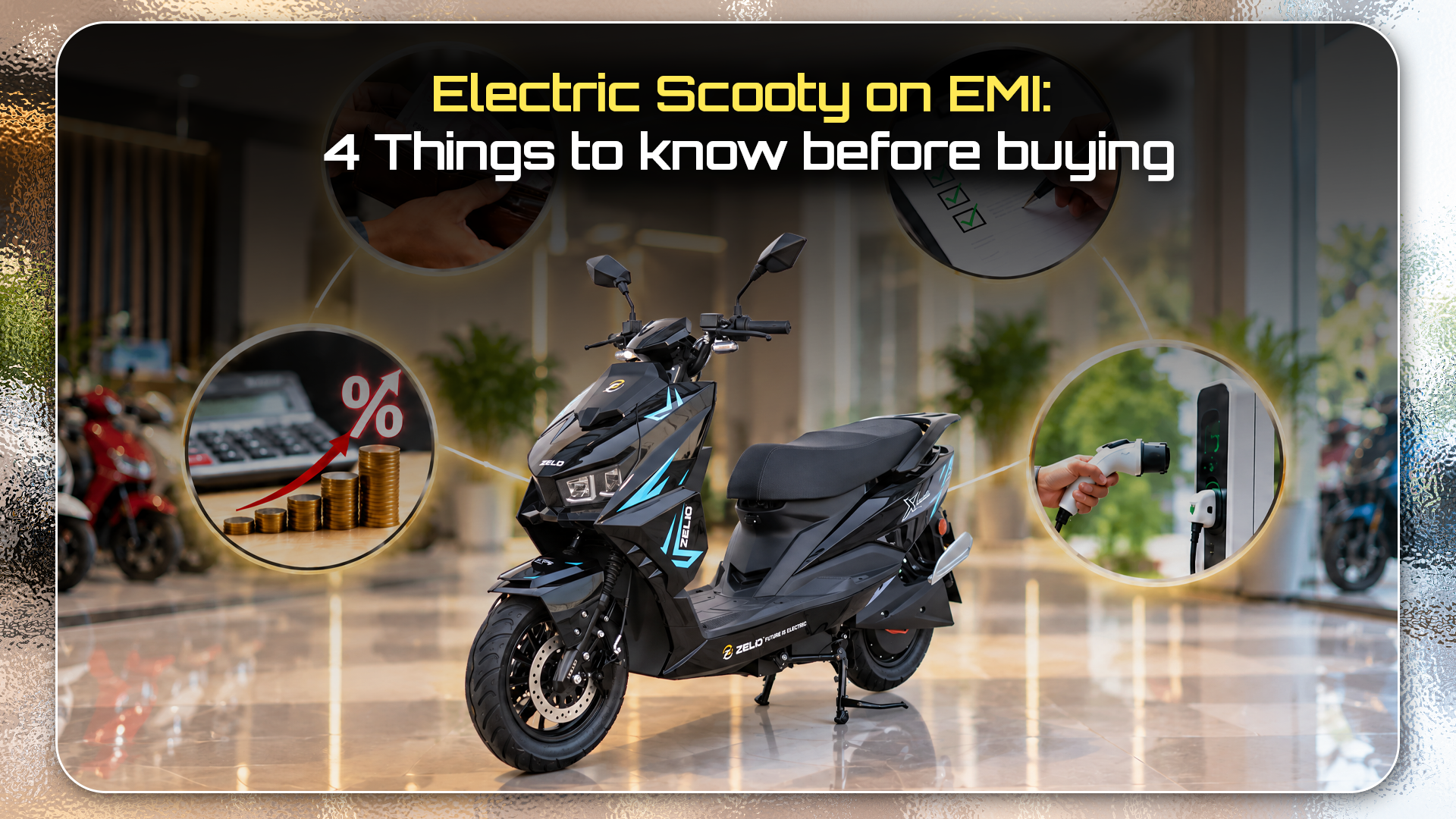
For most people asking this question, the answer is simpler than the internet makes it sound. If you ride mostly inside a city or a town, both the numbers and the everyday experience point the same way. There is a smaller group of riders for whom things are less clear and it is only fair to talk about them honestly instead of pretending they do not exist. The Running Cost Math Still Favours Electric Nobody can really argue with this part anymore because the numbers have not shifted back towards petrol. An electric scooter usually costs around a quarter of a rupee per kilometre to run. A petrol scooter sits closer to two and a half rupees per kilometre at current fuel prices. For someone riding thirty five kilometres a day, that gap turns into real money by the end of the year, not something you barely notice on a receipt. Then there is maintenance. An electric motor has far fewer moving parts than a petrol engine, so there is no oil to change, no clutch to wear out and fewer reasons to visit a mechanic in general. Stretch that across three or four years of ownership and the saving on upkeep starts to matter almost as much as the saving on fuel. On top of all that, a good number of electric scooters in India also skip road tax and registration fees entirely, a saving that a lot of buyers only discover once they sit down and look at the actual RTO charges and road tax rules that apply to a petrol scooter in their state. Check the latest on-road prices for all Zelio scooter models at the battery scooty price list . What Has Changed for the Better by 2026 A few years back, the complaints people had about electric scooters in India made sense. Range felt tight. Charging away from home was a gamble. Some early models struggled on Indian roads. Much of that has quietly been fixed. Most electric scooters today carry a certified range that looks generous on paper, but real-world range in Indian city traffic, with pillion weight, traffic light stops and monsoon drag, typically lands around sixty to eighty percent of that certified figure. Even after that drop, most riders still end up covering enough distance for their daily commute without giving it much thought. Charging at home has also become the normal way people do it, since almost every scooter now plugs into a regular household socket overnight. And if you would rather skip the entire licence and registration process, what is often called a non-RTO scooter still lets you do exactly that, legally and with no paperwork involved. Where the Real Limitations Still Sit None of this means every problem has been solved and it would not be fair to pretend otherwise before someone spends their own money. Charging outside major cities is still patchy. If your daily life involves long, unplanned rides through areas with limited charging support, an electric scooter asks more planning of you than a petrol one does right now. Weather plays its part too. A cold morning slows a battery down until it warms up through use and a hot afternoon puts a different kind of strain on the cells. Neither of these comes down to one brand doing something wrong. It is just how lithium batteries behave. If your daily distance regularly goes past what your scooter can realistically cover, you end up planning your day around a charge instead of the other way round. Who Should Actually Make the Switch If you ride somewhere between fifteen and fifty kilometres a day, mostly inside a city or town and you have a place to plug in overnight, this is about as good a time as any to switch. Students, daily office commuters, delivery riders working local routes and people running errands around town are usually the ones who gain the most. If your riding regularly means long, unpredictable highway stretches with no charging point in sight, it makes sense to wait a while or look at a longer range model built for that kind of use, rather than assuming every electric scooter suits every kind of ride. This is also where a properly registered high-speed scooter, the kind that actually needs RTO registration and a driving licence the same way a petrol scooter does, tends to make more sense than a low speed model. A Few Zelio Scooters to Consider If everything above has you leaning towards electric, a few Zelio models fit different kinds of riders. The Zelio Gracy i is the one most daily commuters end up with, offering a solid mix of range, price and reliability for typical city use. The Zelio Little Gracy suits someone who wants something lighter to handle through narrow streets and tight parking. For riders covering longer distances every day, the Zelio Legender+ Premium carries a bigger battery built for exactly that. Every low speed model in Zelio's range skips the driving licence and RTO registration process and the low speed versus high speed guide explains exactly how that works. Whichever scooter you choose, the habits that keep a battery healthy over the years matter just as much as the scooter itself, especially through the kind of temperature shifts covered in why an electric scooter can feel a little slower on a cold morning .

Read More
Why Your Electric Scooter Beeps Before It Even Starts Moving

Why Your Electric Scooter Beeps Before It Even Starts Moving

Turn the key on any electric scooter and before it moves an inch you will hear a short beep. Most of us have heard it hundreds of times without ever wondering what it actually means. It is not there for effect. That little beep is your scooter finishing a job behind the scenes, one it needs to complete before it lets you ride. The Scooter Checks Itself Before It Lets You Ride An electric scooter runs on a small set of parts that all need to agree with each other before power reaches the wheel. The battery pack has its own management system watching voltage, current and temperature. The controller sits between the battery and the motor deciding how much power to send and when. The throttle and brake each carry their own sensors telling the controller what the rider is doing at that exact moment. When you switch the scooter on, all of these parts run through a quick check. The controller confirms the throttle is sitting at rest and has not been left twisted or stuck. It confirms the brake lever is in its normal position rather than jammed. It also confirms it is receiving a proper signal from the battery's management system rather than silence or a fault code. Only once every one of these checks comes back clean does the scooter let itself move. The beep you hear is the sound of that checklist finishing. One short clean beep almost always means everything passed and the scooter is ready. If you have heard several beeps in a row instead of one that is usually the system telling you something specific did not check out cleanly. Most often it is a brake lever that has not fully returned to its resting position or a throttle that was accidentally engaged before the scooter powered on. Check the latest on-road prices for all Zelio scooter models at the battery scooty price list . Why This Matters More on an Electric Scooter Than a Petrol One A petrol engine announces itself the moment it starts. There is no mistaking that a scooter with a combustion engine is switched on and capable of moving. An electric motor does not give you that same warning. At low speed in particular it can be close to silent, which is a genuine safety concern for pedestrians who rely on sound to notice a vehicle before they see it. That silence is the reason regulators in several countries now require electric vehicles to carry some form of audible warning system. Electric drivetrains simply produce far less noise than combustion engines at low speed, so manufacturers had to build sound back into the experience rather than remove it entirely. The startup beep plays a small part in this. It tells you the scooter is live and ready to move. In a quiet parking area it can just as easily let someone standing nearby know the scooter next to them is no longer switched off. Keyless Systems Add a Second Sound to Listen For If your scooter has a keyless drive system that startup beep often arrives paired with the confirmation tone of the lock releasing. The two sounds happen so close together that most riders hear them as one, though they are actually doing two separate jobs. One confirms the security system has recognised you and unlocked the drivetrain. The other confirms the internal check has passed and the scooter is genuinely ready to move rather than just unlocked. This is part of why an electric scooter with an anti-theft alarm is harder to simply push away and ride off with. Without the correct startup sequence completing successfully the drivetrain never actually engages, no matter who has physically picked the scooter up. The Beep Can Sound a Little Different on a Cold Morning If you have noticed the startup sound taking a fraction longer to appear on a cold morning you are not imagining it. A battery running at a lower temperature takes a little longer to confirm a stable reading to the controller. This is the same reason electric scooters feel a touch slower to respond on cold mornings before they have had a chance to warm through. A Few Zelio Scooters and How This Plays Out on Each Every Zelio scooter runs through the same self check sequence before it lets the rider move. The battery management system behind that check keeps working quietly in the background throughout the ride, not just at startup. The Zelio Gracy i comes with keyless drive and an anti-theft alarm, so the startup sequence also confirms the security system before the drivetrain engages. The Zelio Little Gracy runs the same check in a lighter, more compact build suited to shorter city rides. For riders who want something built around longer daily distances, the Zelio Legender+ Premium carries a larger battery through the same startup process, with the management system watching a bigger pack instead of a smaller one. Sources Wikipedia, "Electric vehicle warning sounds" Electric Scooter Car, "Electric Scooter Troubleshooting Fix: No Power, Charging and Battery Fixes"

Read More
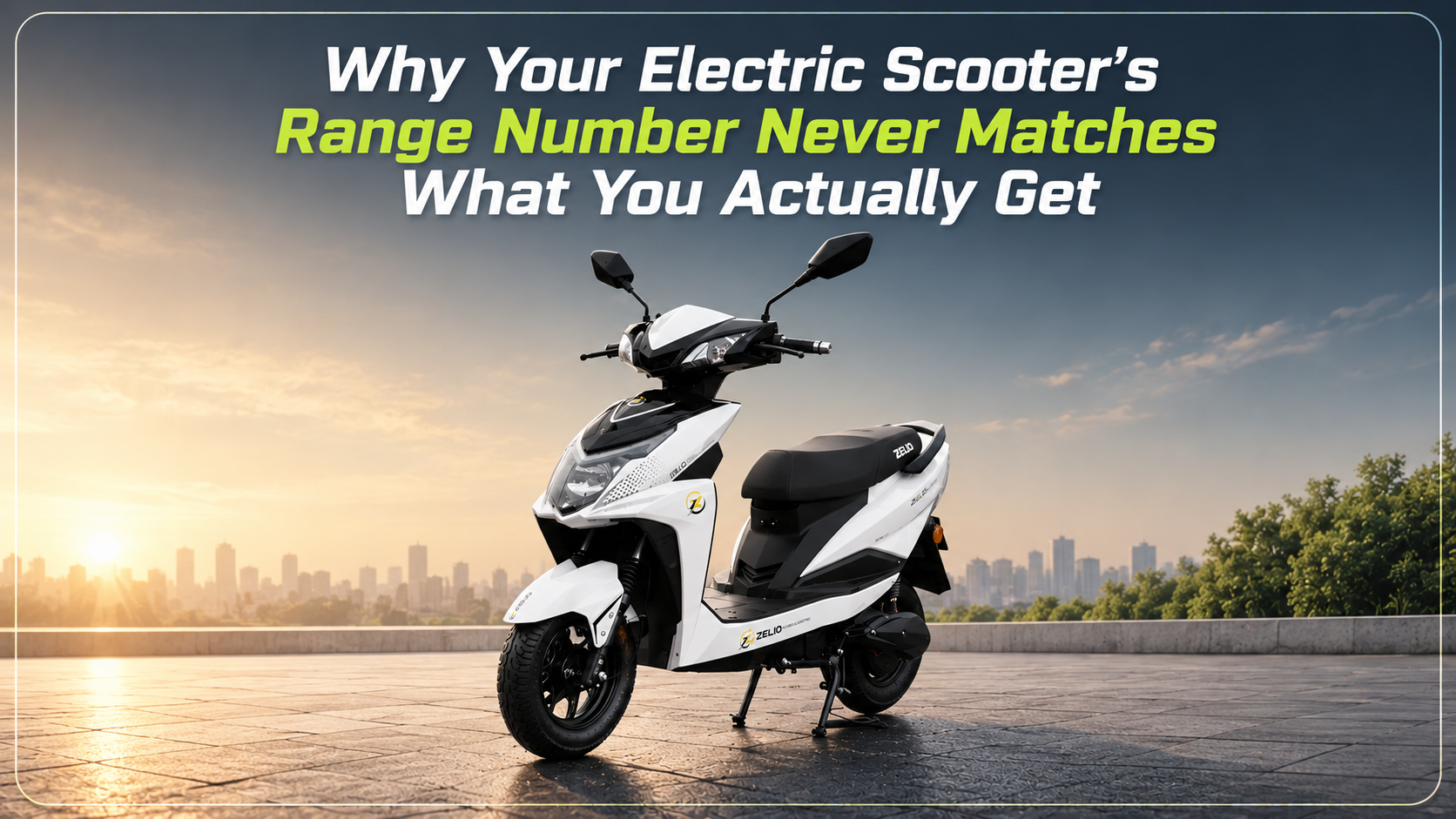
Why Your Electric Scooter's Range Number Never Matches What You Actually Get

Why Your Electric Scooter's Range Number Never Matches What You Actually Get

The brochure said ninety kilometres. Your scooter has never once come close to that on a single charge, and by now you have probably started to wonder whether something is wrong with your battery. Nothing is wrong. This gap between the number printed on a spec sheet and the distance a rider actually covers is one of the most consistent complaints in electric mobility, and it exists for reasons that have very little to do with the quality of the scooter you bought. Understanding where that number comes from changes how you read every future spec sheet, and it stops the range indicator from feeling like it is lying to you. What That Claimed Figure Actually Represents The range printed on an electric scooter's box comes from a certified test, usually carried out on a dynamometer by an authorised testing agency rather than on an actual road. The vehicle runs at a fixed, steady speed with no traffic signals, no braking, no wind resistance, and no gradient to climb. The rider used in these tests tends to be light, the tyres are at ideal pressure, the battery is brand new, and the ambient temperature sits at a comfortable level that neither strains the battery nor helps it. India moved from an older single-cycle test to a combined urban and extra urban testing method a few years back, specifically to bring these numbers closer to how people actually ride. Even with that change, a laboratory can only simulate so much. It cannot simulate a red light every four hundred metres, a pothole that forces a sudden brake, or the particular way you twist the throttle when you are running late. That printed number was never a promise. It was always a best case, measured under conditions almost nobody rides in every single day. Check the latest on-road prices for all Zelio scooter models at the battery scooty price list . The Gap Is Real, and It Is Larger Than Most Riders Expect Independent testing across several popular electric scooters has found real-world range typically landing somewhere between seventy and eighty five percent of the claimed figure, with some scooters falling well below that depending on how they are ridden. One well known scooter advertised a certified range in the high hundreds of kilometres, yet its own manufacturer's real-world figure, measured in the most efficient riding mode, came in over twenty percent lower, and dropped further still once a rider switched to a faster mode. If you want a rough planning number that has held up across multiple independent tests, multiplying the claimed range by roughly seven tenths gets you close to what most riders should expect on an average day. It is not exact, but it saves you from planning a route around a number that was never realistic in the first place. What Actually Eats Into Your Range A handful of everyday factors are responsible for almost the entire gap, and none of them are unique to your scooter. Your weight and whatever you are carrying - The test rider used for certification is deliberately light. A heavier rider, a filled grocery bag hanging off the handlebar, or a passenger riding pillion all mean the motor works harder to move the same distance, which drains the battery faster than the lab figure accounts for. Stop and start traffic - Every red light, every slow crawl through a market, and every sudden brake costs you energy that a steady, uninterrupted lab test never has to spend. Indian city traffic is almost the opposite of the conditions a range figure is measured under. How you use the throttle - Gentle, gradual acceleration sips power. Aggressive acceleration away from every signal, or riding at the scooter's top speed instead of a moderate one, pulls noticeably more current from the battery for the same distance covered. Gradient and terrain - Climbing even a mild flyover or a sloped road takes more energy than flat ground, and that energy does not fully come back to you on the way down, unlike what regenerative braking marketing sometimes implies. Temperature - Both extremes work against you. A battery performing at its coldest, on those mornings when it takes a few kilometres just to feel normal again , delivers less usable range until it warms through from riding. Extreme heat causes its own separate strain on the cells. Tyre pressure and general upkeep - Underinflated tyres increase rolling resistance, which is a fancy way of saying the motor has to push harder for the same result. This is one of the few factors on this list that is genuinely within your control on a weekly basis. Battery age - A two year old battery simply does not hold the same charge it did on day one. This is normal chemical wear, not a defect, though good charging habits over the years slow that decline considerably. Every one of these factors stacks on top of the others - On a hot, heavy traffic day with a pillion rider and slightly soft tyres, do not be surprised if your real range sits well under what a single one of these factors alone would suggest. Why This Matters More on a Low Speed Scooter If you ride one of the low speed electric scooters that need no licence and no RTO registration , range behaviour tends to feel a little more forgiving day to day, simply because these scooters are not being pushed toward high speed cruising in the first place. A scooter capped around twenty five kilometres an hour naturally avoids the steep power draw that comes with sustained high speed riding, which is one of the biggest range killers on faster registered scooters. That does not mean the gap between claimed and real figures disappears entirely, but it tends to be a gentler drop rather than a dramatic one. What Range Can You Expect from Zelio Scooters? Zelio builds its electric scooters in India, with manufacturing spread across facilities in Haryana, Odisha, and Tamil Nadu, and every battery goes through testing under real riding conditions rather than only inside a laboratory. That approach matters here specifically, because a range figure tested closer to how Indian roads actually behave tends to hold up better once a scooter reaches an actual rider's daily commute. Range figures across Zelio's lineup are built around realistic city use rather than a single flattering number, which is why most models are quoted with a range rather than one optimistic peak figure. The Zelio Gracy i is rated between sixty and ninety kilometres depending on the battery variant, and in everyday city commuting most riders land comfortably within that band without chasing the upper limit. The Zelio Little Gracy is built lighter and suits shorter city routes, where stop and start traffic has less time to eat into the charge before you are home again. For riders covering longer daily distances, the Zelio Legender+ Premium carries a larger battery specifically to absorb the kind of real-world losses described above, so the range that actually matters, the one you experience on your commute, still holds up at the end of the day. Getting a Number You Can Actually Trust The only range figure worth planning around is the one you measure yourself. Charge fully, ride your normal route for a week, note the distance covered before the battery needs charging again, and you will have a far more honest baseline than anything printed on a spec sheet. That number will still shift a little with the seasons, since a battery riding through a cold December morning behaves differently from the same battery in April, but it will be grounded in how you actually ride rather than how a machine rode it in a lab. And the habits that protect a battery's long term health , avoiding deep discharges, charging with the right equipment, keeping it out of extreme heat, are the same habits that keep your real-world range closer to its best for years rather than months. Sources BikeDekho, "Here's What IDC Range Means In Electric Two-Wheelers" ZigWheels, "EV Simplified: Claimed Vs Real-world Range Of Two-wheelers" E-Vehicle Info, "What Is ARAI Range In EV And How Is It Measured?" RiderGuide, "Electric Scooter Range: Claimed vs Tested Across 12 Models"

Read More