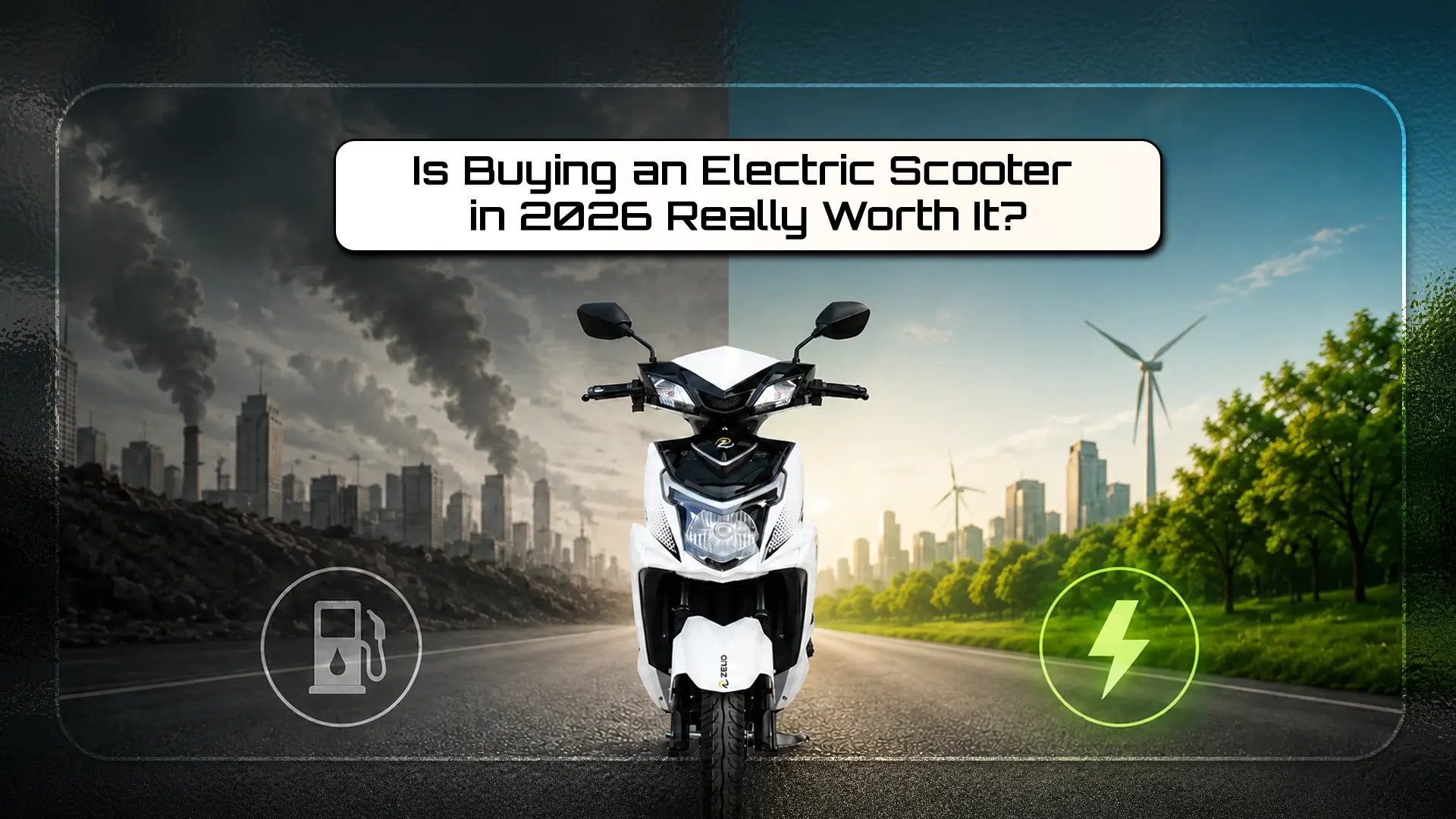
For most people asking this question, the answer is simpler than the internet makes it sound. If you ride mostly inside a city or a town, both the numbers and the everyday experience point the same way. There is a smaller group of riders for whom things are less clear and it is only fair to talk about them honestly instead of pretending they do not exist.
The Running Cost Math Still Favours Electric
Nobody can really argue with this part anymore because the numbers have not shifted back towards petrol. An electric scooter usually costs around a quarter of a rupee per kilometre to run. A petrol scooter sits closer to two and a half rupees per kilometre at current fuel prices. For someone riding thirty five kilometres a day, that gap turns into real money by the end of the year, not something you barely notice on a receipt.
Then there is maintenance. An electric motor has far fewer moving parts than a petrol engine, so there is no oil to change, no clutch to wear out and fewer reasons to visit a mechanic in general. Stretch that across three or four years of ownership and the saving on upkeep starts to matter almost as much as the saving on fuel. On top of all that, a good number of electric scooters in India also skip road tax and registration fees entirely, a saving that a lot of buyers only discover once they sit down and look at the actual RTO charges and road tax rules that apply to a petrol scooter in their state.
Check the latest on-road prices for all Zelio scooter models at the battery scooty price list.
What Has Changed for the Better by 2026
A few years back, the complaints people had about electric scooters in India made sense. Range felt tight. Charging away from home was a gamble. Some early models struggled on Indian roads. Much of that has quietly been fixed.
Most electric scooters today carry a certified range that looks generous on paper, but real-world range in Indian city traffic, with pillion weight, traffic light stops and monsoon drag, typically lands around sixty to eighty percent of that certified figure. Even after that drop, most riders still end up covering enough distance for their daily commute without giving it much thought. Charging at home has also become the normal way people do it, since almost every scooter now plugs into a regular household socket overnight. And if you would rather skip the entire licence and registration process, what is often called a non-RTO scooter still lets you do exactly that, legally and with no paperwork involved.
Where the Real Limitations Still Sit
None of this means every problem has been solved and it would not be fair to pretend otherwise before someone spends their own money.
Charging outside major cities is still patchy. If your daily life involves long, unplanned rides through areas with limited charging support, an electric scooter asks more planning of you than a petrol one does right now. Weather plays its part too. A cold morning slows a battery down until it warms up through use and a hot afternoon puts a different kind of strain on the cells. Neither of these comes down to one brand doing something wrong. It is just how lithium batteries behave.
If your daily distance regularly goes past what your scooter can realistically cover, you end up planning your day around a charge instead of the other way round.
Who Should Actually Make the Switch
If you ride somewhere between fifteen and fifty kilometres a day, mostly inside a city or town and you have a place to plug in overnight, this is about as good a time as any to switch. Students, daily office commuters, delivery riders working local routes and people running errands around town are usually the ones who gain the most.
If your riding regularly means long, unpredictable highway stretches with no charging point in sight, it makes sense to wait a while or look at a longer range model built for that kind of use, rather than assuming every electric scooter suits every kind of ride. This is also where a properly registered high-speed scooter, the kind that actually needs RTO registration and a driving licence the same way a petrol scooter does, tends to make more sense than a low speed model.
A Few Zelio Scooters to Consider
If everything above has you leaning towards electric, a few Zelio models fit different kinds of riders. The Zelio Gracy i is the one most daily commuters end up with, offering a solid mix of range, price and reliability for typical city use. The Zelio Little Gracy suits someone who wants something lighter to handle through narrow streets and tight parking. For riders covering longer distances every day, the Zelio Legender+ Premium carries a bigger battery built for exactly that.
Every low speed model in Zelio's range skips the driving licence and RTO registration process and the low speed versus high speed guide explains exactly how that works. Whichever scooter you choose, the habits that keep a battery healthy over the years matter just as much as the scooter itself, especially through the kind of temperature shifts covered in why an electric scooter can feel a little slower on a cold morning.