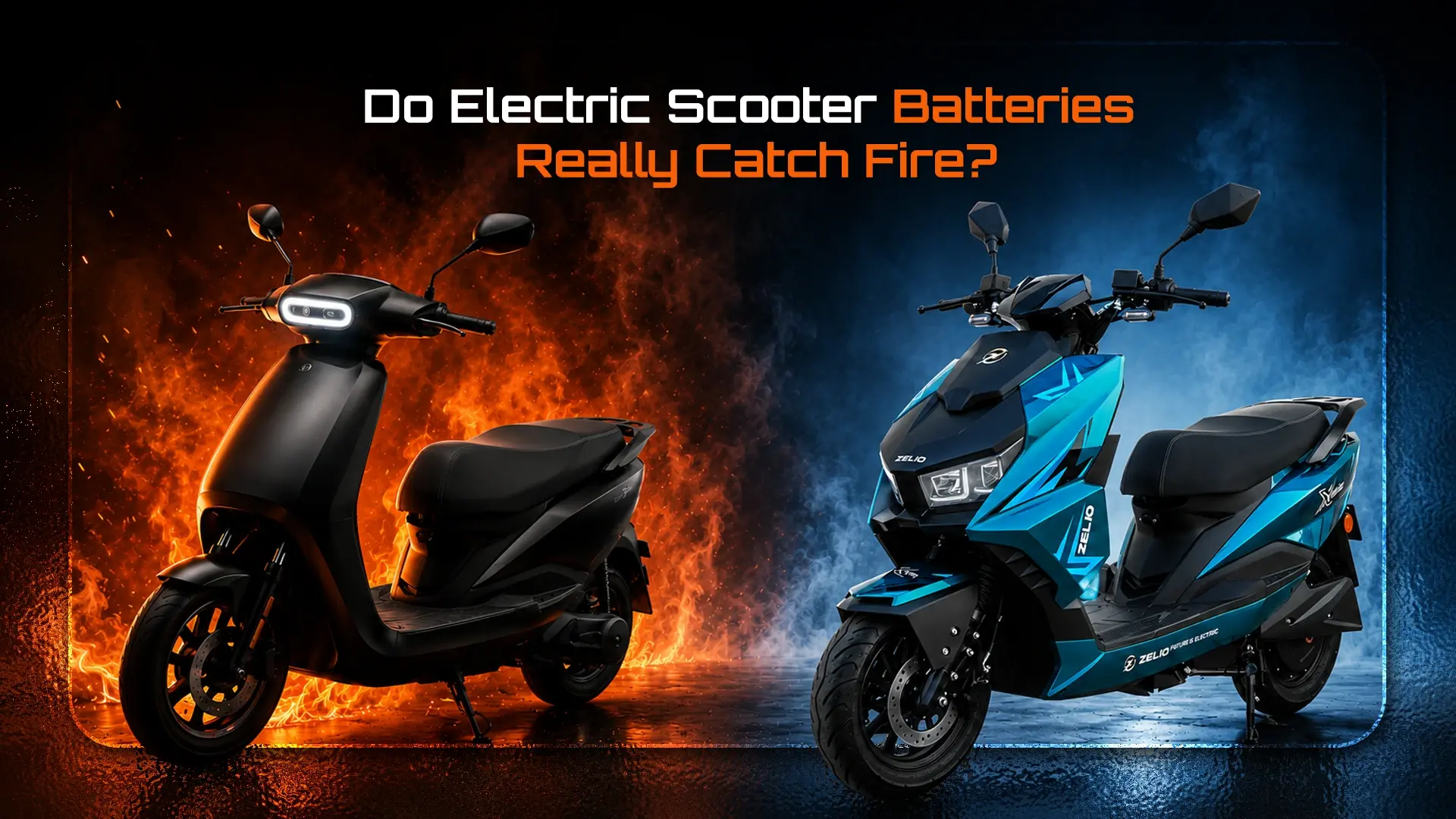
Yes, it has happened. A few years ago, videos of scooters catching fire were all over social media, and some of those incidents ended in real tragedy. We are not going to dance around that. But the honest answer needs the full picture too, because "yes, it happened" and "you should worry every time you plug in your scooter" are two very different things.
Here is what actually causes these fires, how often they really happen compared to what most people assume, and what genuinely keeps you safe.
What Actually Happens Inside a Battery When It Catches Fire
Every lithium-ion battery, whether it is in a scooter, a phone, or a laptop, packs a large amount of energy into a small space. Normally that energy comes out slowly and safely. A fire starts when something upsets that balance and the battery slips into what is called thermal runaway.
In simple terms, if a cell inside the battery gets damaged, overheated, or was made with a flaw to begin with, it can short circuit from the inside. That short circuit creates heat. The heat sets off a reaction that creates even more heat, and that heat spreads to the cell sitting right next to it. Once this chain starts, the battery heats up faster than it can cool down, and that is when you see smoke and then flames.
This is not unique to scooters. It is the same basic process behind battery fires in phones and laptops too. A scooter just holds a lot more of these cells packed close together, which is why it looks far more dramatic when it happens.
What Actually Sets It Off in Real Scooters
A handful of specific things tend to cause this, and none of them are a mystery once you know what to look for.
Poor quality battery cells. Some past fire cases were traced back to cells that were never properly tested for Indian heat and road conditions before they were fitted into a scooter.
Overcharging or charging left unattended for too long. Leaving a scooter plugged in far past what it needs, especially overnight with no one keeping an eye on it, puts stress on cells that a good system should already be preventing.
Physical damage. A battery that has been dropped, punctured, or knocked around in a fall can develop a fault that does not show up right away. Sometimes the fire happens hours or even days later.
Too much heat. Charging a scooter right after it has come in from a long ride in peak summer, or leaving it parked in direct sun for hours, pushes the battery closer to its limit.
Fast charging on a hot day. Rapid charging naturally creates more heat than a normal charge. Doing that on an already hot day is one of the more avoidable risks.
Unauthorised repairs. A battery pack opened up and fixed outside a proper service centre, usually to save a bit of money, is one of the more common causes flagged in past investigations.
Check the latest on-road prices for all Zelio scooter models at the battery scooty price list.
How Common Is This, Really
This is the part most conversations skip, and it changes the picture quite a bit.
Fire data collected around the world, drawing on transportation safety agencies and fire departments, shows electric vehicles catching fire at roughly 25 incidents for every 100,000 vehicles sold. Petrol and diesel vehicles sit at around 1,500 per 100,000, and hybrid vehicles, which carry both a fuel tank and a battery, actually come out worst at around 3,400 to 3,500 per 100,000.
In plain terms, a petrol vehicle is far more likely to catch fire than an electric one. The difference is that petrol fires happen often enough that nobody films them anymore. A small number of electric scooter fires a few years ago, some fatal, spread quickly online because they were new and visually dramatic, and that shaped how people feel about this far more than the actual numbers support.
That is not an excuse for the incidents that did happen, and the risk is not zero. But the worry should match the real risk, not how many times a clip has been shared.
What Has Changed Since Then
That earlier wave of fires was a genuine wake up call for the industry, and it led to real regulatory change, not just public statements.
Battery testing requirements got a lot stricter. Manufacturers were pushed toward a tougher safety standard that requires batteries to survive vibration testing, thermal shock, mechanical drop tests, short circuit simulations, and controlled overcharge and discharge testing before they can be sold in a vehicle in India.
More recently, an even tighter standard was introduced specifically covering the powertrain components of electric two-wheelers. The direction is clear. Every fire that made headlines pushed regulators to close a gap that some manufacturers had been getting away with.
What Actually Keeps You Safe as a Rider
Most of what protects you comes down to habit, not luck.
- Always use the charger that came with your scooter. A mismatched or third-party charger is one of the easiest ways to push a battery beyond what it was built to handle.
- Give the battery a few minutes to cool down after a long, hot ride before you plug it in, especially during peak summer.
- Do not leave your scooter charging for hours longer than it needs, particularly overnight in a closed room with poor airflow.
- If your scooter has taken a fall or been in a collision, get the battery checked before charging it again, even if nothing looks damaged on the outside.
- Get repairs done only at a proper service centre. A cheaper local fix on a battery pack rarely saves you money in the long run.
- Watch for warning signs. A battery that feels unusually hot, looks swollen, or shows any leakage should be checked immediately instead of charged again out of convenience.
Zelio Scooters Built With This in Mind
Every Zelio scooter goes through real world testing on Indian roads in Indian heat before it reaches a rider, not just controlled lab conditions. The battery management system tracks individual cell voltage and temperature throughout every ride, not just at charging time, which is what actually keeps a battery pack healthy over the years.
If you are looking at options right now, the Zelio Gracy i is a solid everyday pick with a strong balance of range and reliability. For a lighter, easier to handle option, the Zelio Little Gracy works well for shorter city rides. And if range matters most to you, the Zelio Legender+ Premium covers longer distances comfortably on a single charge.
To keep your battery running safely and lasting longer no matter which model you choose, our guide on extending your electric scooter's battery life covers the daily habits that matter most.