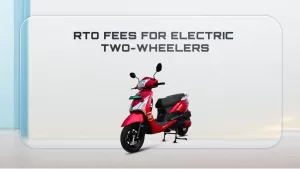
RTO Fees for Electric Two-Wheelers in India
Category Electric Scooters
If you are buying a high speed electric scooter in India, the ex-showroom price is just the starting point. By the time the scooter is registered and ready to ride on public roads, you have also paid registration fees, road tax, insurance, and a few other charges. This blog breaks all of that down clearly so there are no surprises when you go to pick up your scooter.
Do All Electric Scooters Need RTO Registration?
No, and this is where most buyers get confused.
India classifies electric two-wheelers into two categories under the Central Motor Vehicles Rules:
Electric scooters with a motor power below 250W and a top speed below 25 km/h do not require RTO registration, a driving licence, or mandatory insurance. They are treated as non-motorised vehicles. Zelio’s Gracy i, EEVA, X-Men, and Legender fall in this category.
Electric scooters with a motor power above 250W or a top speed above 25 km/h are treated as motor vehicles. They need full RTO registration, a valid driving licence, and mandatory insurance. The Zelio Mystery falls in this category.
Everything below applies only to high-speed electric scooters.
To find the nearest Zelio dealer, visit zelioebikes.com or call 9254071391.
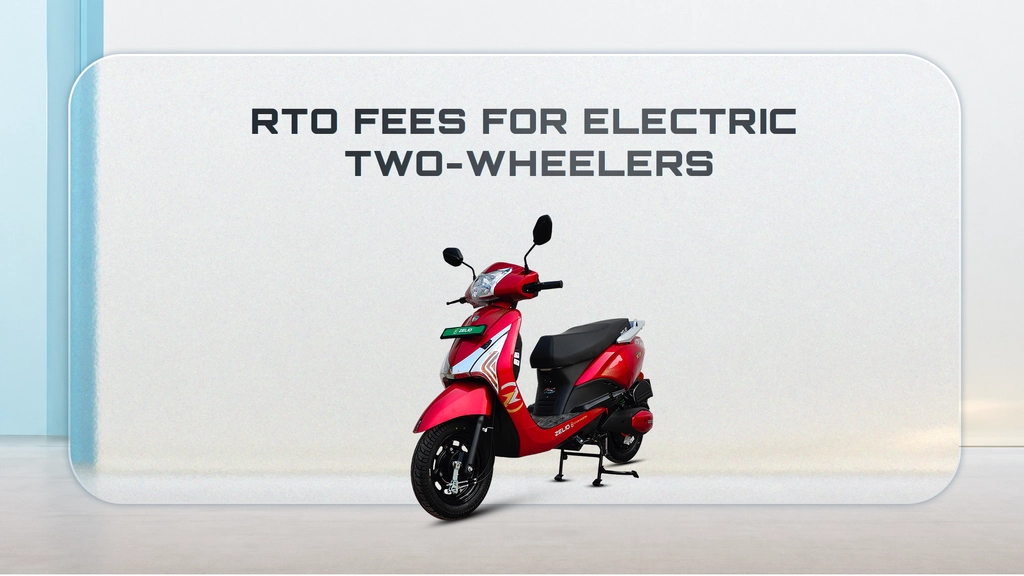
What RTO Fees Do You Actually Pay?
The total RTO cost is made up of several components, each charged separately:
|
Fee Component |
Approximate Amount |
|
Registration Fee |
Rs. 300 to Rs. 500 |
|
Smart Card RC |
Rs. 200 |
|
HSRP Green Number Plate |
Rs. 400 to Rs. 500 |
|
Road Tax |
0% to 12% of ex-showroom price (varies by state) |
|
Hypothecation Charges (if on loan) |
Rs. 1,500 |
|
Dealer Handling Charges |
Rs. 500 to Rs. 1,500 |
|
Third-Party Insurance (mandatory, 5 years) |
Rs. 4,500 to Rs. 7,500 |
Road tax is the biggest variable here. It is calculated as a percentage of the ex-showroom price and differs from state to state. For electric two-wheelers, many states have waived road tax entirely, which is a significant saving compared to petrol scooters where road tax typically runs between 6% and 12% of the ex-showroom price.
Road Tax on Electric Two-Wheelers: State by State
|
State / Union Territory |
Road Tax on Electric Two-Wheeler |
|
Andhra Pradesh |
100% exemption |
|
Bihar |
100% exemption |
|
Chandigarh |
100% exemption |
|
Chhattisgarh |
100% exemption |
|
Delhi |
100% exemption (Delhi EV Policy 2026-2030) |
|
Gujarat |
1% until March 2026; confirm current rate with local RTO as policy was due for review |
|
Haryana |
100% exemption for first 30,000 electric two-wheelers under EV Policy 2022; quota may be exhausted; confirm with local RTO |
|
Jammu and Kashmir |
100% exemption |
|
Jharkhand |
100% exemption |
|
Karnataka |
100% exemption for electric two-wheelers |
|
Ladakh |
100% exemption |
|
Madhya Pradesh |
4% (full exemption expired March 2026) |
|
Maharashtra |
100% exemption |
|
Odisha |
100% exemption |
|
Punjab |
100% exemption |
|
Rajasthan |
100% exemption |
|
Tamil Nadu |
100% exemption (until 2027) |
|
Telangana |
100% exemption (until December 2026) |
|
Uttar Pradesh |
100% exemption |
Two states need a specific note. Gujarat’s 1% rate was confirmed valid only until March 31, 2026 and may have reverted to the standard 6% rate unless the state renewed the policy. Haryana’s exemption was capped at the first 30,000 electric two-wheelers registered under the 2022 policy. If that quota has been exhausted, the exemption no longer applies to new buyers. Always confirm the current rate with your nearest RTO or authorised dealer before purchasing.
Road tax policies change as states revise their EV incentive programs. The trend across the country is that states which currently offer full exemption are beginning to phase these out as EV sales grow. Karnataka ended its four-wheeler EV exemption in April 2026 but two-wheelers remain exempt for now. Madhya Pradesh ended its full exemption in March 2026. More states are likely to follow over the next couple of years. If your state currently offers full exemption, buying sooner means locking in that savings before the policy changes.
Documents You Need for EV Registration
The process is largely handled by the dealer today via the Parivahan portal. What you need to provide:
Form 20 (application for registration), Form 21 (sale certificate from dealer), Form 22 (manufacturer’s safety compliance certificate), purchase invoice, valid insurance certificate, Aadhaar card, PAN card, address proof, and passport-size photographs. For loan purchases, hypothecation details are submitted alongside these.
Once the RTO approves everything, you get a permanent Registration Certificate and a green number plate, which is mandatory for all EVs in India.
How the Registration Process Works
On the day of purchase the dealer issues a temporary registration number valid for 30 days, so you can ride legally while permanent registration is processed.
Within 30 days the dealer submits your documents to the local RTO via the Parivahan portal. Road tax and registration fees are paid at this stage.
Within 15 to 30 working days the RTO verifies the application and issues your smart card RC. In many states this RC is also available digitally on DigiLocker and the mParivahan app.
The green number plate is fitted at the dealership by an authorised HSRP vendor, usually within the same 30-day window.
What the On-Road Price Actually Looks Like
Here is a real example using the Zelio Mystery at Rs. 76,051 ex-showroom, registered in Delhi where full EV road tax exemption applies:
|
Component |
Amount |
|
Ex-showroom Price |
Rs. 76,051 |
|
Registration Fee |
Rs. 500 |
|
Smart Card RC |
Rs. 200 |
|
HSRP Green Number Plate |
Rs. 450 |
|
Road Tax |
Rs. 0 (100% exemption) |
|
Third-Party Insurance (5-year) |
Rs. 5,500 (approx.) |
|
Dealer Handling |
Rs. 1,000 (approx.) |
|
Estimated On-Road Price |
Rs. 83,701 |
A similarly priced petrol scooter in a state charging 6% road tax would attract Rs. 4,410 in road tax alone at purchase, before you factor in fuel costs over time.
The Green Number Plate
All registered electric vehicles in India must carry a green number plate with white lettering. This is mandatory under Ministry of Road Transport and Highways rules. It helps traffic authorities identify the vehicle as an EV and may be required for access to EV-specific infrastructure that states are rolling out. The plate costs Rs. 400 to Rs. 500 and is part of the dealer’s registration package.
How EV Registration Policies Are Changing in 2026
The PM E-DRIVE scheme is now the central government’s EV incentive program, replacing FAME-II. Subsidies are applied upfront at the time of purchase for eligible models. Ask your dealer whether your chosen model qualifies.
Several states that previously offered 100% road tax exemptions are beginning to revise these policies. Karnataka ended its blanket exemption for four-wheelers in April 2026, though two-wheelers remain exempt for now. Madhya Pradesh let its exemption expire in March 2026. More states are likely to follow over the next couple of years. If your state currently offers full exemption, buying sooner means locking in that saving before the policy changes.
High Speed vs Low Speed: RTO Cost at a Glance
|
RTO Registration |
Mandatory |
Not required |
|
Road Tax |
Applicable (often 0% with exemptions) |
Exempt |
|
Driving Licence |
Mandatory |
Not required |
|
Insurance |
Mandatory |
Optional |
|
Green Number Plate |
Mandatory |
Not required |
|
Minimum Age |
18 years |
16 years |
|
Registration Fee |
Rs. 300 to Rs. 500 |
Nil |
FAQs
Q1. Do I need to register a low-speed electric scooter?
No. Electric scooters with a motor below 250W and a top speed below 25 km/h do not require RTO registration. Models like the Zelio Gracy i, EEVA, and Legender fall in this category.
Q2. What is the RTO registration fee for a high-speed electric scooter?
The base registration fee is Rs. 300 to Rs. 500. Add Rs. 200 for the smart card RC and Rs. 400 to Rs. 500 for the HSRP green number plate. Road tax is separate and depends on your state.
Q3. Is road tax free for electric two-wheelers in India?
In most states, yes. States including Delhi, Maharashtra, Tamil Nadu, Telangana, Rajasthan, Punjab, UP, Bihar, Odisha, Chhattisgarh, Jharkhand, Karnataka, Andhra Pradesh, J&K, Ladakh, and Chandigarh offer 100% road tax exemption on electric two-wheelers as of 2026. Always confirm the current position with your local RTO as these policies change regularly.
Q4. What is the green number plate and is it mandatory?
Yes, it is mandatory for all registered EVs in India. It has a green background with white lettering, costs Rs. 400 to Rs. 500, and is fitted at the dealership.
Q5. How long does EV registration take?
Temporary registration is issued on the day of purchase and is valid for 30 days. The permanent RC is typically issued within 15 to 30 working days after document submission.
Q6. What documents are needed to register a high-speed electric scooter?
Form 20, Form 21, Form 22, purchase invoice, insurance certificate, Aadhaar card, PAN card, address proof, and passport-size photographs. For loan purchases, hypothecation documents are also needed.
Q7. Can I register my scooter in another state to save road tax?
No. The Motor Vehicles Act requires you to register in the state where you permanently reside. Registering elsewhere for tax purposes is not permitted and can result in penalties.
Q8. What happens if I ride a high-speed electric scooter without registration?
A fine of Rs. 2,000 for the first offence and Rs. 5,000 plus possible legal action for repeat offences. Your insurance claims can also be rejected.
Q9. Do road tax exemptions apply across all of India?
Not uniformly. Most states currently offer full or partial exemption but policies are changing. Check the latest notification from your state transport department before buying.
Q10. Where can I find the Zelio Mystery?
At 350+ authorised Zelio dealers across India. visit zelioebikes.com or call 9254071391 to find your nearest dealer.
References
Read more articles about electric scooters
Zelio E-Mobility Unveils New Electric Rickshaw, Tanga Nine+ at RideAsia EV Expo 2026
April 29, 2026
No Comments
Read More »