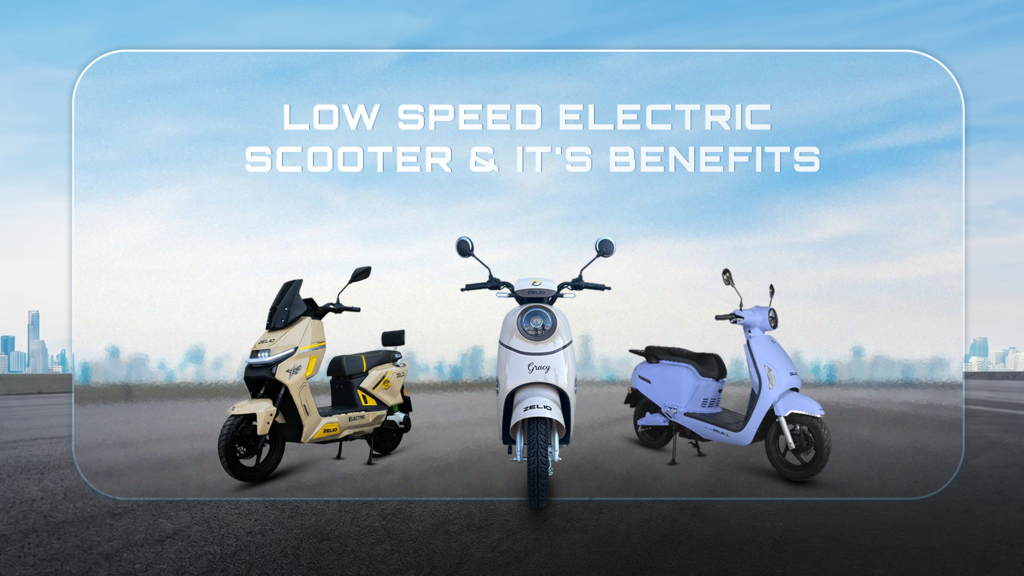
Low Speed Electric Scooter and Its Benefits

Low Speed Electric Scooter and Its Benefits

A low speed electric scooter lets you ride legally in India without a licence, without registration, and without petrol bills. If you are looking for a daily scooter for local travel within 20 to 40 km, this is the most practical and affordable option available right now.


What is a Low Speed Electric Scooter?

A low speed electric scooter is an electric two-wheeler with a motor power of 250W or less and a top speed capped at 25 km/h. Under India's Central Motor Vehicles Rules (CMVR), any scooter meeting both these conditions is exempt from RTO registration, driving licence, road tax, and mandatory insurance. 

These are also called non-RTO electric scooters. Both terms mean the same thing.

They are built for the travel that makes up most of a person's day. Market runs, college commutes, office trips within 15 km, local errands, colony roads, school drops. Not highways, not long distances.


Best Low Speed Electric Scooters in India: Zelio E Bikes

Zelio E Bikes is one of India's leading low speed electric scooter brands with [confirm current count] non-RTO models and 2.5 lakh plus happy riders. Here are the best Zelio low speed scooters available right now.

Zelio Eeva Eco LX – Starting at Rs. 47,784, Zelio's most affordable model overall. A practical, no-frills option for anyone prioritising price above all else, backed by the same 2-year warranty as the rest of the lineup. See the full price list for pricing across every variant.

Zelio Little Gracy – Starting at Rs. 51,234, the lightest low speed scooter in the Zelio range. Low seat height, both feet flat on the ground at a stop, fully gearless. Best for short daily trips within 15 to 20 km. Ideal for first-time riders, senior citizens, and students.

Zelio Gracy i – 80 to 90 km range, one of the most popular non-RTO electric scooters in the Zelio lineup. USB charging port, anti-theft alarm, and a lithium-ion battery that gives 80 to 90 km on a single charge. Practical for daily use, charges on a regular home socket overnight.

Zelio Eeva – Lightweight with lithium battery, built for daily city commuting. Lower weight, better battery life, and easy to park in tight spaces. Good for housewives, college students, and daily commuters who want a simple ride.

Zelio X Men+ – The newly launched 2026 variant, also a low speed, no-RTO model, with a larger rear wheel, improved suspension, and updated styling across four new colourways.

Zelio X-Men 2.0 – Range up to 100 km, a sturdy non-RTO scooter built for heavier daily use. 150 kg load capacity and a stable ride on varied city roads. Works well as a shared household scooter or for shop and delivery use.

Zelio Logix – Range up to 140 km, the highest range low speed electric scooter in the Zelio range. Built for riders who cover longer distances daily but still want all the benefits of a non-RTO scooter. No licence, no registration, no petrol bills.

Zelio Gracy Pro – Range up to 120 km, a stylish low speed scooter with a premium look and solid daily range. Anti-theft alarm, digital display, and centre lock. Good for riders who want comfort and style alongside practical non-RTO benefits.

All Zelio non-RTO low speed scooters come with a 2-year warranty on motor, frame, and controller. 350 plus dealers across India.

Prices shown are ex-showroom for Haryana, Uttar Pradesh, and Punjab. Prices vary by state, check the full price list for your location.

To find the nearest Zelio dealer, visit zelioebikes.com or call 9254071391.


Benefits of a Low Speed Electric Scooter

No licence required

Anyone aged 16 and above can ride a low speed electric scooter in India. No driving licence, no RTO process. You buy it and ride it the same day. 

No registration, no number plate, no paperwork

No RC book to wait for, no number plate to apply for. The scooter is road-ready the moment you buy it.

No mandatory insurance

Insurance is not required by law for low speed electric scooters. That saves Rs. 1,500 to Rs. 3,000 every year.

Running cost is almost nothing


Cost per km

Monthly cost at 20 km a day

Petrol scooter

Rs. 2 to Rs. 3

Rs. 1,200 to Rs. 1,800

Low speed electric scooter

Rs. 0.20 to Rs. 0.30

Rs. 120 to Rs. 180

The savings is Rs. 1,000 to Rs. 1,600 every month. Around Rs. 12,000 to Rs. 20,000 every year. No oil changes, minimal servicing. If you want to see this played out for a specific model, the under Rs 50,000 breakdown runs the same math against the Eeva Eco LX in more detail.

Safer for city and colony roads

The 25 km/h speed cap keeps the rider in full control on colony lanes, market areas, school zones, and hospital roads. No sudden acceleration, no risk of losing balance in tight spaces.

Easy to charge at home

A standard 5-amp home socket is all you need. Plug it in at night, ready by morning. No charging station, no special setup.

Lightweight and easy to handle

Most low speed electric scooters weigh between 60 to 80 kg. Easy to park, easy to balance, easy to ride through narrow lanes.


Low Speed vs High Speed Electric Scooter


Low Speed Electric Scooter

High Speed Electric Scooter

Top speed

Up to 25 km/h

45 km/h and above

Registration

Not required

Mandatory

Driving licence

Not required

Mandatory

Insurance

Optional

Mandatory

Road tax

Exempt

Applicable

Minimum age

16 years

18 years

Best for

Colony, campus, city lanes

Main roads, highways

If you're weighing whether the higher speed and range of a registered model is worth the extra paperwork, the Zelio Mystery is currently Zelio's only high-speed option, priced at Rs 85,159.


Things to Keep in Mind Before Buying a Low Speed Scooter

Speed is capped at 25 km/h. If your daily commute involves main arterial roads or highways, a low speed scooter is not the right fit.

For daily distances above 60 km, go with a lithium-ion battery model over lead-acid. Better range, longer battery life, lower weight. If budget is the main constraint rather than range, our electric scooter under Rs 30,000 guide covers what's realistic at the lower end of this category.


Warranty and Support

Component

Warranty

Frame

2 Years

Motor

2 Years

Controller

2 Years

Battery

1 to 3 Years depending on model


Dheeraj

No tags
Share

Frequently Asked
Questions

RELATED POSTS

Electric Scooty Price in Tamil Nadu: On-Road Cost
Electric Scooters
11 Sep, 2026

Electric Scooty Price in Tamil Nadu: On-Road Cost

Search "electric scooty price" and the figure that pops up is almost always the ex-showroom price, which is rarely what actually lands in your hand at the dealership. Tamil Nadu adds its own small variations on top of that, city to city, dealer to dealer. Here's what the real number looks like and how it moves across Zelio's lineup. Why Price Isn't One Fixed Number Across Tamil Nadu Handling and logistics costs shift by city: A scooter priced in Chennai can differ slightly from the same model in Madurai or Trichy, purely because of dealer freight and local handling charges, even before any state-level tax difference comes into play. Battery variant changes the price more than anything else: The gap between a lead-acid and lithium-ion version of the same model in Tamil Nadu typically runs ₹15,000 - 20,000 and that single choice affects price more than city location ever will. Non-RTO status removes a chunk of hidden cost: A large part of what inflates a petrol scooter's real price, registration, road tax, licence fees and mandatory insurance, simply doesn't apply to scooters that stay under 250W motor power and 25 km/h top speed, as defined under Rule 2(u) of the Central Motor Vehicles Rules. That single classification difference is often worth ₹8,000 - 15,000 saved before you've ridden a single kilometre. Ex-Showroom vs On-Road: Where the Gap Comes From Component Applies to Non-RTO Scooters? Typical Cost in Tamil Nadu Ex-showroom price Yes Varies by model RTO registration No ₹0 Road tax No ₹0 Driving licence fee No ₹0 Insurance Optional ₹0 - 2,500/year if opted Dealer handling charge Yes ₹1,500 - 3,000 Home delivery/logistics Yes, if applicable ₹500 - 1,500 For a non-RTO electric scooty, the on-road price in Tamil Nadu usually sits within ₹2,000 - 4,000 of the ex-showroom figure, a far smaller gap than what petrol buyers deal with once registration and insurance get added. Zelio Electric Scooty Price List for Tamil Nadu Model Lead Acid Price Lithium-ion Price Battery Range Zelio Gracy ₹63,884 ₹80,559 Up to 120 km Zelio Little Gracy ₹51,234 ₹70,784 60-90 km Zelio Eeva ₹55,834 ₹72,509 90-100 km Zelio Legender+ Premium ₹65,059 ₹81,734 Up to 150 km Zelio Gracy+ ₹59,309 ₹75,984 80-130 km Zelio Logix Loader ₹66,184 ₹82,859 70-100 km Prices shown are indicative and can shift slightly by dealer and city. Always confirm current figures on the battery scooty price list before finalising a purchase. Resale Value: The Part Most Price Comparisons Skip Electric scooters in Tamil Nadu tend to hold a somewhat lower resale percentage than petrol scooters in year one, largely because second-hand buyers are still cautious about battery health. That gap narrows from year two onward, especially for lithium-ion models, since battery degradation data has become easier to verify through service history and app-based diagnostics on newer models. Buyers planning to resell within 2-3 years should factor in battery type when weighing sticker price against long-term value. Running Cost: The Number That Makes Price Worth It Over Time Cost head Petrol Scooter Electric Scooty Cost per km ₹2.5-3 ₹0.25-0.30 Monthly fuel/power cost (30 km/day) ₹2,250-2,700 ₹225-270 Annual servicing ₹4,000-6,000 ₹1,000-2,500 Over three years, this difference alone typically offsets a large part of the upfront price gap between a petrol scooter and a comparable non-RTO electric one. Zelio Models Worth Comparing on Price in Tamil Nadu Zelio Gracy Launched specifically for Tamil Nadu, priced from ₹59,999, aimed at college students with 50 litres of boot space and a range up to 120 km depending on battery. Zelio Little Gracy The lowest entry price in the lineup, a practical first-scooter option for students and short-distance riders. Zelio Eeva Sits in the mid-price band with dependable everyday range, a fair middle ground between entry-level and premium. Zelio Legender+ Premium The highest-priced model here, justified by the longest range in the lineup at up to 150 km, useful for riders who don't want to think about charging every day. Zelio Gracy+ A slightly upgraded version of the standard Gracy, priced a notch above it for a bit more daily range. Zelio Logix Loader Priced for utility riders, with light cargo capacity that makes it a reasonable option for small shop owners and gig workers across Tamil Nadu's towns. So What Should You Actually Budget For? For most riders in Tamil Nadu, a realistic on-road budget for a non-RTO electric scooty sits between ₹55,000 and ₹80,000 depending on battery type and range needs, with EMI options bringing the monthly outflow down to roughly ₹2,800-3,500. Add the savings on fuel, servicing, registration and licence fees, and the total cost of ownership comparison tilts further in the electric scooter's favour the longer you hold onto it. Want exact pricing for your city or a test ride nearby? Use the Zelio dealer locator to find the nearest showroom in Tamil Nadu.

Read More
Non-RTO Scooter and Traffic Police Rules: What Happens If You Get Stopped

Non-RTO Scooter and Traffic Police Rules: What Happens If You Get Stopped

The first time an officer waves you down on a scooter with no number plate, the mind goes blank for a second. No registration certificate in the seat storage. No licence in the wallet. Nothing that looks like the paperwork every other rider on that road is carrying. That blank second is where the trouble starts. Not because the law is against you, but because most riders cannot explain, on the spot, why it is on their side. The Rule Your Scooter Sits Under Rule 2(u) of the Central Motor Vehicles Rules, 1989 defines what the law calls a Battery Operated Vehicle. The clause came in through notification GSR 589(E) dated 16 September 2005. The conditions that matter today arrived later, through GSR 291(E) dated 24 April 2014, which replaced the earlier proviso. As the rule stands now, a two wheeled battery operated vehicle is not deemed a motor vehicle when a testing agency notified under Rule 126 verifies three things: The thirty minute rated power of the motor stays below 0.25 kW The maximum speed of the vehicle stays below 25 km/h The vehicle is fitted with suitable brakes plus retro-reflective devices The power condition and the speed condition have to hold together. This is where most of the confusion on Indian roads begins. A scooter running a 1000 watt motor that has been software limited to 25 km/h does not qualify, because the motor rating on its own crosses the line. The exemption looks at what the motor is rated for, not what the controller happens to permit that morning. The difference between low speed and high speed electric scooters comes down to exactly this pair of numbers. Clear both conditions and the vehicle sits outside the definition of a motor vehicle. No registration. No licence. No road tax. There Is No RC to Show, So Carry This Instead Here is the part riders get wrong before they even leave the showroom. There is no registration certificate to produce. An exempt scooter is never issued one, because an RTO has no reason to register a vehicle the law does not treat as a motor vehicle. There is no driving licence to produce either. What you should be carrying is the original purchase invoice from your dealer, along with any specification sheet or declaration from the manufacturer that states the motor rating plus the top speed. If your dealer can hand over a copy of the model's exemption test report from the authorised testing agency, keep that with the invoice. None of this is legally mandatory the way an RC is for a registered vehicle. In practice it is the difference between a stop that lasts two minutes and one that lasts twenty. What an Officer Can Check at the Roadside With no RC or licence in the picture, an officer stopping a non-RTO scooter is really checking one thing. Does this vehicle qualify for the exemption it is claiming? That comes down to three points. The motor rating, usually stamped or stickered on the motor housing itself. The top speed, which an officer may ask about or occasionally ask you to demonstrate over a short stretch. And in some cases the battery specification listed on the vehicle or in your paperwork, used as a rough cross check against motor output. Checking those is well within an officer's authority. Fining you for the absence of a licence or a registration certificate the law never required you to hold is a separate matter entirely. The Confusion Is Real, It Has Reached the Courts This is not a hypothetical problem cooked up for a blog post. A group of lawyers has taken the issue to both the Bangalore High Court and the Delhi High Court, flagging that low speed electric two wheelers are being sold in the market without the exemption certification a Rule 126 testing agency is supposed to grant. The same filings point out that several state RTO authorities are themselves unclear on what that certification involves, or that it is required at all. If the offices meant to administer the rule are still catching up on it, an officer on a Tuesday afternoon at a busy junction is not going to have it memorised. One challan made the rounds online for exactly this reason. An electric scooter owner was fined for not carrying a pollution under control certificate, a document an electric vehicle has no way of holding, since there is no tailpipe on it to test. The ticket was written anyway. That is the level of confusion a rider can walk into with a perfectly legal vehicle. What to Say When the Officer Has Not Heard of the Exemption Keep it short and keep it calm. State that the scooter is a low speed electric vehicle exempt from registration plus licensing under Rule 2(u) of the Central Motor Vehicles Rules, because the motor stays under 250 watts and the top speed stays under 25 km/h. Then hand over the invoice rather than continuing to talk. A document in hand settles far more roadside confusion than an explanation does, however correct the explanation happens to be. Most officers are not looking for an argument. They are looking for something that lets them close the interaction and move on. If the officer is still unfamiliar with the rule and decides to proceed anyway, do not stand there debating it. Note the officer's name, badge number plus the location, then sort it out through the proper channel afterwards. If a Challan Gets Issued Anyway Yes, a challan can be issued at the roadside even when the scooter is exempt. That does not make the challan valid. It only means it can physically happen, usually where the officer is unaware of the rule or believes the vehicle does not meet the conditions. The practical route after that is the grievance or dispute section on the e-challan portal, where you submit the purchase invoice plus specification sheet as evidence that the vehicle meets the Rule 2(u) conditions. Plenty of minor traffic disputes also get sorted directly at the local traffic police station, or through Lok Adalat sessions that several states run for uncontested traffic matters. Keep a photo of the invoice plus the specification sheet saved on your phone alongside the physical copies. It makes the whole process considerably faster. It also means a wet monsoon afternoon does not leave you with nothing to show. The Paperwork Settles It Faster Than the Argument Across every account of this situation, the same pattern shows up. It is almost never the legal reasoning that ends a roadside stop. It is the dealer invoice with the motor rating plus the top speed printed on it in black and white. An officer who has not encountered Rule 2(u) before is far more likely to accept a printed document with numbers on it than a verbal claim about a rule they have never been briefed on. So ask your dealer for that documentation at the time of purchase. Keep a physical copy in the scooter plus a digital one on your phone. Ownership of a non-RTO scooter is otherwise close to paperwork free, which the full picture of what a non-RTO scooter means day to day covers in more detail. This one document is the exception worth holding on to. Zelio Models That Sit Inside This Exemption Zelio Gracy i , Rs 58,159 Built to stay within the 250 watt motor plus 25 km/h limits that define the non-RTO category, with specification details provided at purchase confirming exactly that. Zelio Little Gracy , Rs 51,233 A lighter, compact option in the same exempt category, suited to riders who want the paperwork free side of a non-RTO scooter without giving up build quality. Zelio Legender+ Premium , Rs 65,059 Carries a larger battery for longer daily distances while staying in the same non-RTO classification as the rest of the low speed lineup. Every Zelio dealer hands over the purchase invoice plus specification details at the time of sale, which is precisely the documentation this piece recommends keeping with you. Model by model pricing sits in the battery scooty price list . If you want to compare against a registered scooter instead, the breakdown of RTO fees for electric two wheelers shows what the other category actually costs to put on the road. Sources Section 2 in The Central Motor Vehicles Rules, 1989 - Indian Kanoon The Central Motor Vehicles Rules, 1989 - Indian Kanoon Highlighting the violation of CMVR and CCPA norms in the sale of low-speed Electric 2Ws - EVreporter Electric scooter owner fined for no pollution certificate, challan pic goes viral - The Tribune

Read More
Non-RTO स्कूटर क्या होता है? पूरी जानकारी 2026
Electric Scooters
24 Aug, 2026

Non-RTO स्कूटर क्या होता है? पूरी जानकारी 2026

This Blog is also available in English . RTO लाइन में घंटों खड़े रहना, डॉक्यूमेंट्स की फाइल तैयार करना, फिर लाइसेंस टेस्ट का इंतजार, अगर स्कूटी खरीदने से पहले यही सब सोचकर मन भारी हो जाता है, तो आपके लिए एक ऐसी कैटेगरी है जिसमें यह पूरा झंझट सिरे से गायब हो जाता है। इसे कहते हैं Non-RTO स्कूटर। Non-RTO स्कूटर का मतलब क्या है Non-RTO स्कूटर वह इलेक्ट्रिक स्कूटर होता है, जिसे सरकार मोटर व्हीकल की जगह इलेक्ट्रिक बाइसाइकिल जैसा ट्रीट करती है। इसके लिए दो शर्तें तय हैं, टॉप स्पीड ज्यादा से ज्यादा 25 km/h और मोटर पावर ज्यादा से ज्यादा 250 वॉट। जो स्कूटी इन दोनों लिमिट के अंदर रहती है, उसे न रजिस्ट्रेशन चाहिए, न नंबर प्लेट, न ड्राइविंग लाइसेंस। बिना लाइसेंस स्कूटी चलाने के पूरे नियम और पात्रता की जानकारी इस ब्लॉग में विस्तार से दी गई है। Non-RTO स्कूटर कौन चला सकता है भारत में 16 साल या उससे ज्यादा उम्र का कोई भी व्यक्ति Non-RTO स्कूटर चला सकता है। यह खासतौर पर स्टूडेंट्स, सीनियर सिटीजन, ऑफिस जाने वाले लोगों और छोटी दूरी तय करने वाले राइडर्स के लिए बनाया गया है। Non-RTO स्कूटर के आंकड़े क्या कहते हैं फैक्टर Non-RTO स्कूटर RTO वाली हाई-स्पीड स्कूटर टॉप स्पीड 25 km/h तक 50 से 100 km/h मोटर पावर 250W तक 1000W से ऊपर लाइसेंस जरूरी नहीं जरूरी रजिस्ट्रेशन जरूरी नहीं अनिवार्य इंश्योरेंस वैकल्पिक अनिवार्य औसत कीमत Rs. 50,000 से Rs .85,000 Rs.85,000 से ऊपर रोजाना की सफर सीमा 30 से 40 किमी 60 किमी से ज्यादा इन आंकड़ों से साफ है कि Non-RTO स्कूटर उन लोगों के लिए बना है जिनका रोजाना का सफर सीमित है और जो बिना कागजी झंझट के तुरंत राइडिंग शुरू करना चाहते हैं। सरकारी सब्सिडी का फायदा इस कैटेगरी पर आमतौर पर लागू नहीं होता, क्योंकि PM E-DRIVE जैसी स्कीम हाई-स्पीड और सर्टिफाइड Lithium-ion बैटरी वाले मॉडल के लिए बनी है। इसकी पूरी शर्तें इलेक्ट्रिक स्कूटर सब्सिडी वाले लेख में समझाई गई हैं। Non RTO Scooter के फायदे लाइसेंस की झंझट नहीं - 16 साल या उससे ऊपर की उम्र का कोई भी व्यक्ति इसे चला सकता है। स्टूडेंट्स, सीनियर सिटीज़न, घर की महिलाएं - किसी को भी लाइसेंस बनवाने के लिए लाइन में लगने की ज़रूरत नहीं। इंश्योरेंस भी अनिवार्य नहीं - कानूनन इसकी ज़रूरत नहीं है, जिससे हर साल करीब 1,500 से 3,000 रुपये तक की बचत होती है। हालांकि, वॉलंटरी इंश्योरेंस लेना समझदारी भरा फैसला रहता है। रनिंग कॉस्ट बहुत कम - इलेक्ट्रिक स्कूटर का खर्च करीब 0.20 से 0.30 रुपये प्रति किलोमीटर आता है, जबकि पेट्रोल स्कूटर पर यह 2 से 3 रुपये प्रति किलोमीटर बैठता है। जो व्यक्ति महीने में 1,000 किमी चलाता है, उसकी बचत करीब 1,700 से 2,700 रुपये प्रति महीना हो जाती है। रजिस्ट्रेशन और रोड टैक्स से मुक्ति - शोरूम से निकलते ही स्कूटी घर ले जाई जा सकती है। न RC बुक का इंतज़ार, न नंबर प्लेट की लाइन। शहर में चलाना ज़्यादा सुरक्षित - 25 किमी/घंटा की स्पीड लिमिट कॉलोनी की सड़कों, स्कूल ज़ोन और भीड़भाड़ वाले इलाकों में चलाने के लिए एक असली सेफ्टी फीचर है। Zelio के Non-RTO स्कूटर Zelio के ज्यादातर मॉडल इसी लो-स्पीड Non-RTO कैटेगरी में आते हैं। इनकी कीमत और रेंज बैटरी टाइप के हिसाब से बदलती है। मॉडल Lead Acid कीमत Lithium-ion कीमत दावा की गई रेंज Zelio Eeva Rs.55,834 Rs.72,509 90 किमी Zelio Little Gracy Rs.51,233 Rs.70,784 60 से 90 किमी Zelio Gracyi Rs.58,159 Rs.74,834 70 से 80 किमी Zelio Legender+ Rs.61,609 Rs.78,284 100 से 120 किमी Zelio Legender+ Premium Rs.65,059 Rs.81,734 150 किमी Zelio LOGIX Rs.61,584 Rs.78,259 80 से 100 किमी ये कीमतें सिर्फ हरियाणा और पंजाब मार्केट के लिए हैं, बाकी राज्यों में कीमत अलग हो सकती है। इन सभी मॉडल्स की पूरी कीमत लिस्ट, बाकी बैटरी वेरिएंट के साथ, बैटरी स्कूटी प्राइस लिस्ट में देखी जा सकती है। किस Zelio मॉडल को चुनना सही रहेगा अगर बजट सबसे बड़ी प्राथमिकता है, तो Zelio Little Gracy सबसे किफायती Non-RTO विकल्प है, जो स्टूडेंट्स और पहली बार खरीदने वालों के लिए सही बैठती है। रोजाना ज्यादा दूरी तय करनी हो तो Zelio Legender+ Premium इस लिस्ट में सबसे ज्यादा रेंज देती है, यही वजह है कि हाल ही में Live Hindustan ने भी इसे Rs.1 लाख से कम के दमदार स्कूटर में शामिल किया। रोजमर्रा के बैलेंस्ड इस्तेमाल के लिए Zelio Eeva और Zelio Gracyi दोनों अच्छे विकल्प हैं। नजदीकी Zelio डीलर कैसे ढूंढें अगर टेस्ट राइड लेनी हो या कीमत को अपने राज्य के हिसाब से कन्फर्म करना हो तो Zelio डीलर लोकेटर से नजदीकी शोरूम का पता लगाया जा सकता है।

Read More